
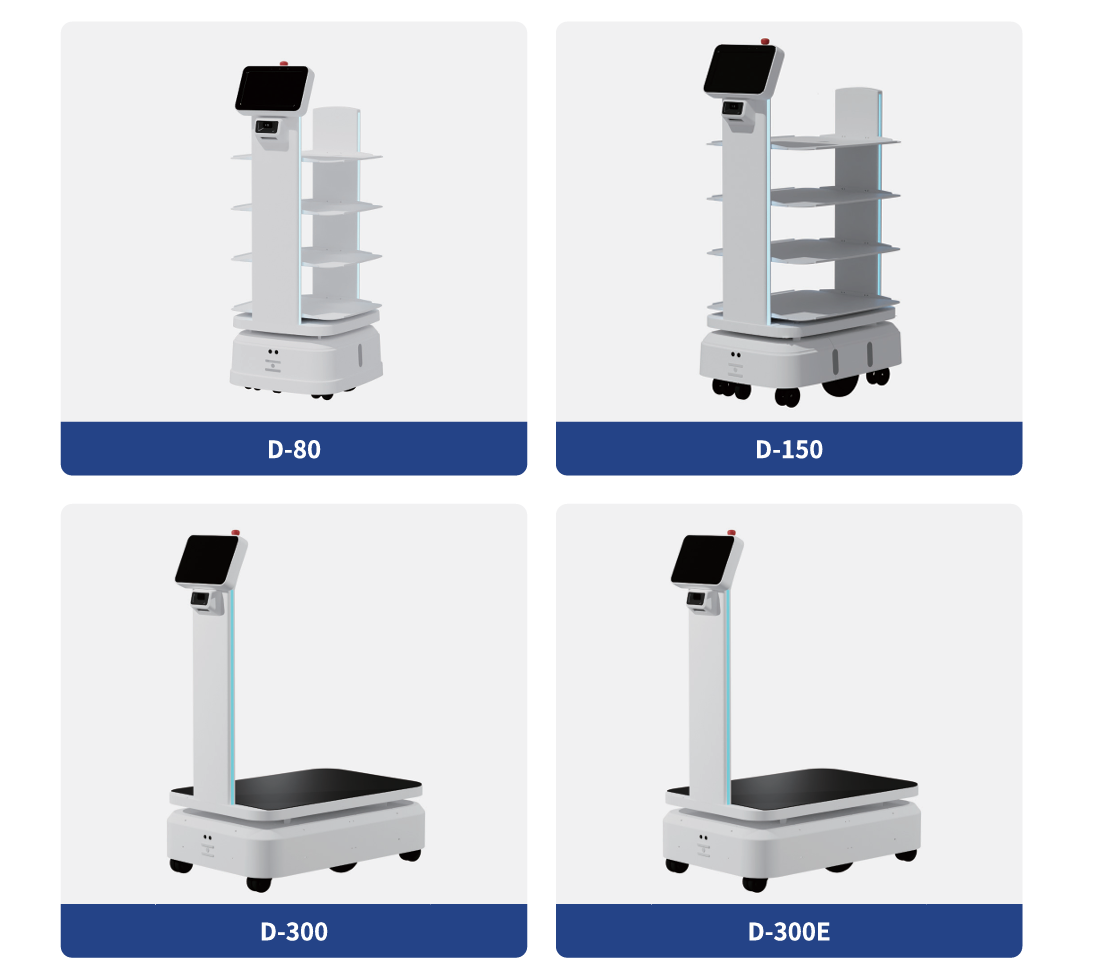
D Series Delivery Robots
D-80 for light item handling agile movement, intelligent operation in narrow space such as production lines, reducing ineffective personnel and improving efficiency.
D-150 & D-300 with a load capacity to 300kg, supporting flexible customization and replacement of carriers.
D-300E with a large cargo area, a load capacity of up 300kg, combining carrying capacity with flexibility.
Suitable for:
Indoor, structured environments like warehouses, factories, and logistics centers where paths are mapped and obstacles are largely predictable.
Intelligent Lifting robots have the lifting function, can autonomously identify shelves and perform lifting operation, achieving unmanned material handling.
Production system integration, Support quick integration with MES, ERP, WMS systems and supports production system task assignment to robots
RCS Scheduling supports multi-robot scheduling.
.
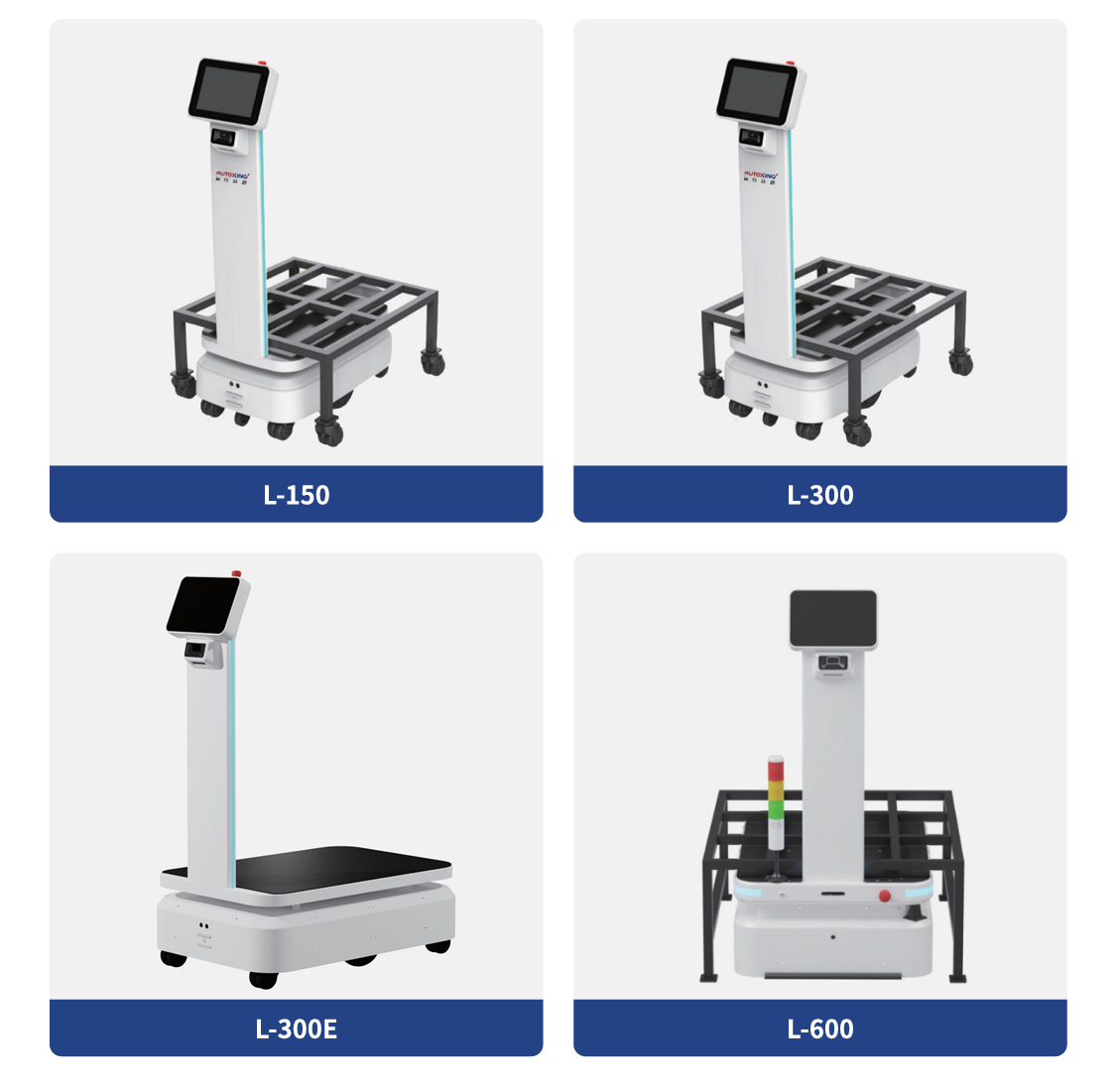
L Series Delivery Robots
Suitable for:
L Series robots = lift‑capable AMRs with greater payload capacity (up to ~600 kg or more), ideal for warehouse and factory material handling where robots autonomously lift and move goods.
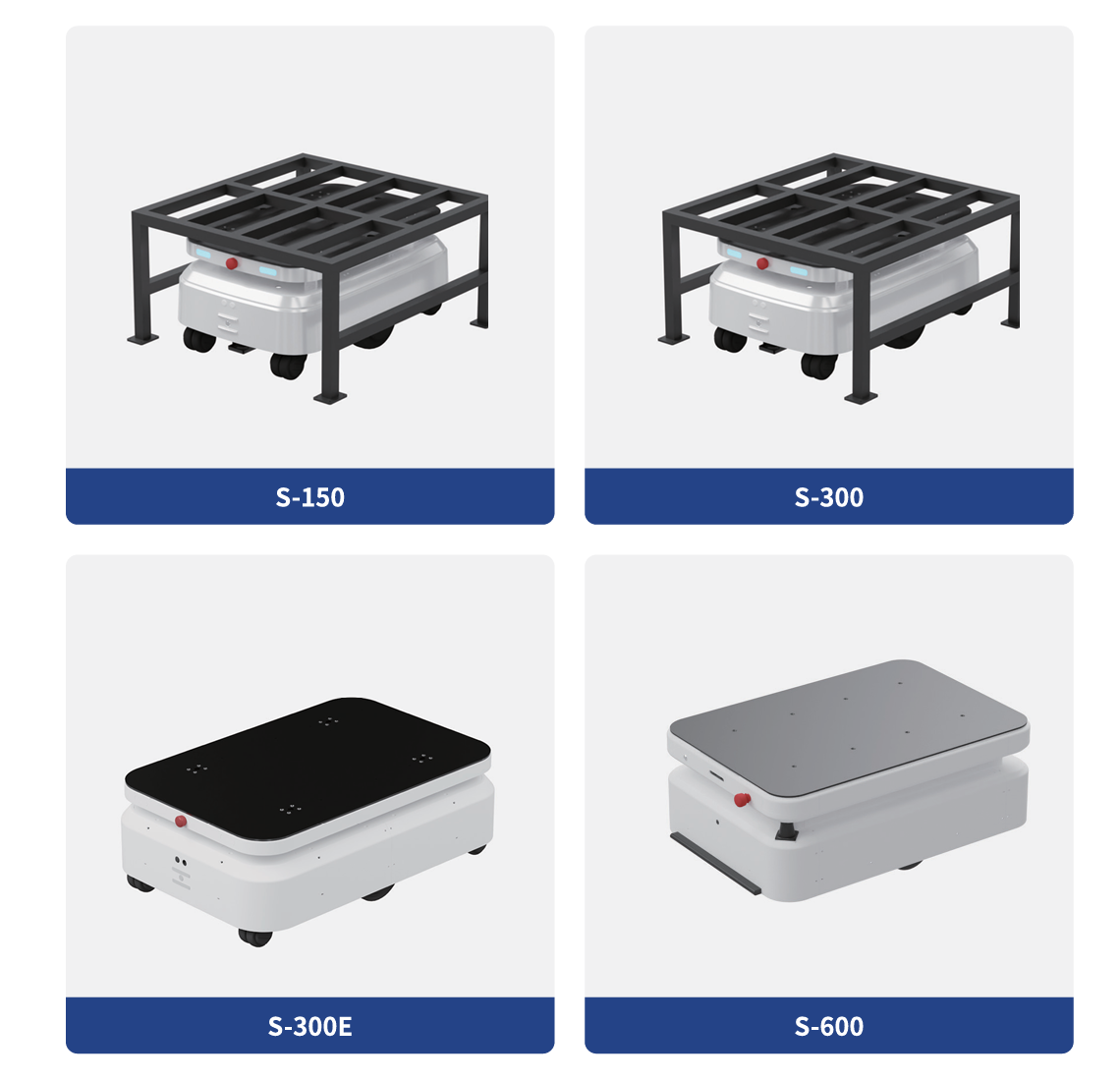
S Series Sub-type Lifting Robots
Intelligent Lifting: Series robots having lifting functions, can autonomously identify shelves and preform lifting operations, achieving material handling
Production System Integration: Supports quick integration with MES, ERP, WMS systems and support production system task assignment to robots
RCS Scheduling: Supports multi robot scheduling.
Best for: restaurants, cafes, hotels, and other indoor service spaces where the robot autonomously delivers trays, dishes, or lightweight items.